Troy · Çanakkale, Türkiye · UNESCO World Heritage

Walk down through nine cities at Troy

Troy I to Troy IX — roughly 3,000 years of settlement, rebuilt on itself again and again in one hill above the Dardanelles. Here's what's actually in the ground, and how to see it.

★★★★★ 4.7  Troy tours on GetYourGuide (993 reviews)

Book the full-day Troy tour on GetYourGuide · free cancellation

Based in Çanakkale instead? Jump to ways to visit ↓

The dig

Nine cities, one hill

Troy isn't one ruin — it's at least nine, stacked directly on top of each other from roughly 3000 BC to the Roman era. Excavators number the layers Troy I (deepest, oldest) to Troy IX (shallowest, most recent). This is roughly what's in the ground, top to bottom.

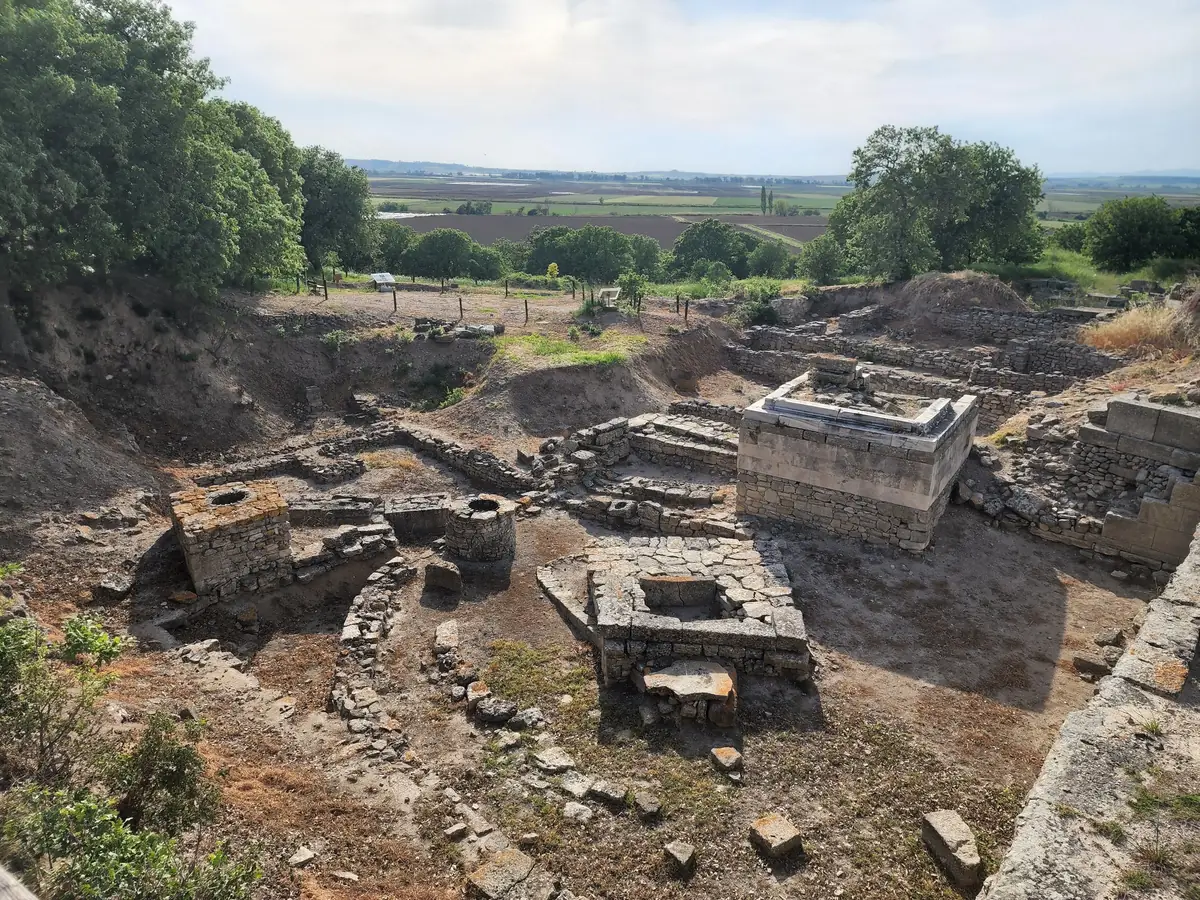
Excavated stone house foundations and a defensive wall at the archaeological site of Troy, Turkey
Troy, Çanakkale
IXSurface
Roman · c. 85 BC – 4th–5th c. AD

Ilium Novum

The uppermost layer is the Roman city of Ilium, which grew into a genuine pilgrimage site once Rome linked its own founding myth back to Troy. Temple foundations and a small theatre from this period are visible on site.

VIIIClassical
Greek · c. 700 – 85 BC

Greek Ilion

A Greek settlement was established over the Bronze Age ruins, later visited by Xerxes and Alexander the Great, both of whom are recorded making offerings at what they understood to be the site of Homeric Troy.

VIIa–bTransition
c. 1200 – 950 BC

After the fall

Troy VIIb represents resettlement after a destruction event, by people whose pottery and building styles differ from the layer beneath — commonly read as new arrivals following whatever happened to Troy VIIa.

VI–VIIaLate Bronze Age
c. 1700 – 1180 BC

The Homeric city

A fortified citadel with massive sloping walls, considered by most archaeologists the strongest candidate for the "Troy" of the Iliad tradition. Troy VIIa shows a violent destruction layer dated to around 1180 BC — thought to be, though not proven to be, the war Homer describes centuries later.

II–VEarly & Middle Bronze
c. 2550 – 1700 BC

The growing settlement

Troy II is where Heinrich Schliemann controversially believed he had found "Priam's Treasure" in the 1870s — a hoard now dated to this earlier, pre-Homeric layer rather than to the Troy of legend.

IBedrock
c. 3000 – 2550 BC

The first city

The oldest layer of all: a small fortified Early Bronze Age settlement at the base of the mound, the foundation everything above it was eventually built on top of, over the following three millennia.

What's here

What actually survives today

Nine cities in the ground don't all look like nine cities above it. Here's what a visitor actually sees on site today.

The ruins

Walking paths thread through excavated stone house foundations and defensive walls spanning the site's different layers — the same foundations and walls visible in the dig above, now open to walk through rather than read about.

The wooden horse

No wooden horse survives from antiquity — it's part of the Iliad's story, not an excavated artefact. Visitors today see a modern wooden horse replica near the site itself, and another well-known replica on the Çanakkale waterfront, originally built for a film production.

The Troy Museum

The Troy Museum, opened in 2018 near Tevfikiye village, holds artefacts from across the nine layers — a short walk from the excavation itself, and commonly ticketed separately from the site.

Plan your visit

The ruins, the museum, or both?

Both are worth doing, but they're not the same stop. Here's how they compare if you're deciding.

Just the ruinsRuins + Troy Museum
Time needed1.5–2.5 hours, unhurriedAdd roughly another hour for the museum
What you seeExcavated foundations and walls across the nine layers, on the ground where they were foundThe same site, plus artefacts from all nine layers displayed together, including finds from the Schliemann excavations
Best forTravellers short on time, or focused on walking the actual excavationAnyone who wants the finds as well as the foundations — most first-time visitors
TicketingEntrance fee at the site — check current pricing before you goSite and museum are commonly ticketed separately, a short walk apart
Ways to visit

Seeing Troy in a day

Three genuine options depending on where you're staying and how much time you have. All bookable on GetYourGuide with free cancellation.

Based in Çanakkale

Half-day Troy tour

~3 hours · guided · pickup available
  • Straightforward, guided visit to the ruins if you're already staying in Çanakkale
  • A guide walks you through the mythology and the archaeology together
  • Shortest option if your time is tight
From $90per person 4.8 · 34
Check dates on GetYourGuide
Ruins + museum

Troy & the Troy Museum, full day

~6 hours · guided · pickup available
  • Pairs the excavation with the Troy Museum's artefacts from all nine layers
  • Best pick if you want the finds as well as the foundations
  • Departs from Çanakkale
From $159per person 4.9 · 20
See the museum & site tour
From Istanbul

Full-day Troy tour from Istanbul

~18 hours · pickup included · most booked
  • The whole day handled for you — hotel pickup in Istanbul, transfer, guided site visit and return
  • No need to base yourself in Çanakkale at all
  • Long day, but the standard way to see Troy from Istanbul
From $163per person 4.7 · 342
Check dates on GetYourGuide
On the peninsula

Beyond Troy: Gallipoli & the Dardanelles

Most people see Troy in half a day and have time to spare. These are the two things worth adding, both bookable alongside your Troy visit.

Top pick nearby

Troy & Gallipoli, full day

10 hours · guided · pickup available
  • Combines ancient Troy with the WWI Gallipoli battlefields on the same peninsula
  • One guide, one day, two very different histories
From $159per person 4.9 · 97
See the Troy & Gallipoli tour
From Istanbul, via the ferry

Troy day trip with lunch & ferry ride

~14.5 hours · skip the line · pickup available
  • Crosses the Dardanelles by ferry rather than the road bridge — part of the day, not just transport
  • Lunch included
From $145per person 4.5 · 16
See the ferry day trip
Know before you go

Getting there & practical notes

Tickets & fees

An entrance fee applies at the site, with the Troy Museum commonly ticketed separately a short walk away. Check the current rate and any combined pricing before you go.

Opening hours

The site and museum keep seasonal hours that shift through the year. Check current opening times before you set out, especially outside peak summer months.

How long

Allow 1.5–2.5 hours to walk the ruins at an unhurried pace; add another hour or so for the museum if you're visiting both.

What to bring

Sun protection and sturdy, closed shoes — the paths are uneven excavated ground with little shade across most of the site.

Where it is

Troy sits near the village of Tevfikiye, a short drive from Çanakkale, on the Turkish side of the Dardanelles.

Getting there

Easiest as a half or full-day trip from Çanakkale, or a long full-day tour from Istanbul that crosses the Dardanelles by road or ferry.

Questions

Troy: your questions answered

Why does Troy have nine layers?

The mound at Hisarlık was resettled and rebuilt on itself repeatedly for roughly 3,000 years, from around 3000 BC into the Roman and Byzantine eras. Archaeologists number these superimposed settlements Troy I through Troy IX, each built over the ruins of the last — which is why the site reads as a stack of cities rather than a single set of ruins.

Which layer was the Troy of the Trojan War?

Troy VI and the following phase, Troy VIIa (roughly 1700–1200 BC), are the layers most commonly associated with the Late Bronze Age city and the Trojan War tradition in Homer's Iliad — Troy VIIa shows signs of a violent destruction around 1180 BC. The link to a specific historical war is debated among scholars and is presented here as tradition, not settled fact.

Is the Trojan Horse at Troy real?

No wooden horse survives from antiquity — it's part of the Iliad's story, not an excavated artefact. Visitors today see a modern wooden horse replica near the site itself and another well-known replica on the Çanakkale waterfront, originally built for a film production.

Do I need a ticket for the Troy Museum as well as the ruins?

The Troy Museum, opened in 2018 near Tevfikiye village, and the archaeological site are separate stops a short walk apart, and are commonly ticketed separately. Check current pricing and hours before you go, as they change year to year.

How do I get to Troy?

Troy sits a short drive from Çanakkale, so it's easiest as a half or full-day trip from there, or as a longer full-day tour from Istanbul that typically crosses the Dardanelles by road bridge or ferry. Guided tours handle the transfers for you.
Full-day Troy tour from Istanbul4.7 ★ · free cancellation
Book now